Welcome to the world of chemistry calculations, where precision meets simplicity. If you’re a student, researcher, or hobbyist diving into solutions and reactions, understanding molarity is key. Molarity measures the concentration of a solute in a solution, expressed as moles per liter (M). But calculating it manually can be tedious—enter the best molarity calculator, your go-to tool for accurate, instant results. In this comprehensive guide, we’ll explore what molarity is, why it’s important, how to use a molarity calculator effectively, and tips to get the most out of it. Whether you’re preparing lab solutions or studying for exams, this article will equip you with everything you need.
What is Molarity and Why Does It Matter?
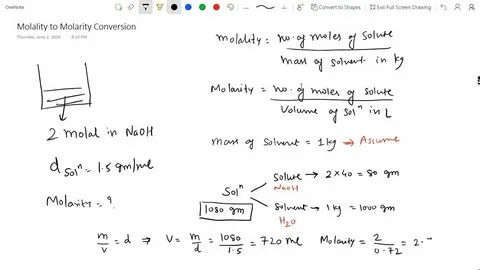
Molarity, denoted as M, is a unit of concentration in chemistry. It tells you how many moles of a solute (the substance being dissolved) are present in one liter of solution. For instance, a 1 M solution of sodium chloride (NaCl) contains 1 mole of NaCl per liter of water. This concept is foundational in fields like analytical chemistry, pharmaceuticals, and environmental science.
Why is molarity crucial? It ensures accurate dilutions, stoichiometry in reactions, and precise measurements in experiments. Imagine you’re a chemist synthesizing a drug—getting the concentration wrong could lead to ineffective or dangerous results. In education, molarity helps students grasp concepts like osmosis, pH, and equilibrium. Without tools like a molarity calculator, these calculations involve multiple steps: finding molar mass, converting units, and applying formulas. That’s where digital calculators shine, saving time and reducing errors.
Historically, molarity was defined by chemists like Wilhelm Ostwald in the late 19th century to standardize solution concentrations. Today, with digital tools, it’s easier than ever. But not all calculators are equal— the best ones offer user-friendly interfaces, educational insights, and versatility.
How Does a Molarity Calculator Work?
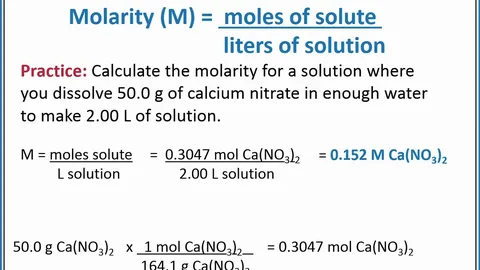
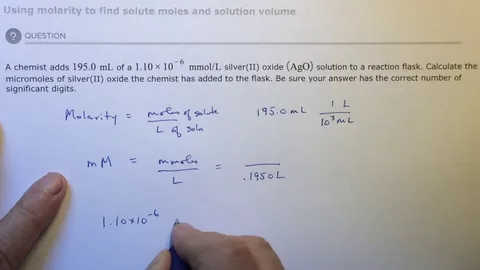
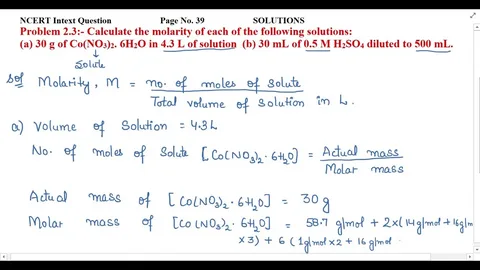
A molarity calculator automates the formula: M = (moles of solute) / (liters of solution). You input variables like solute mass, molar mass, and volume, and it outputs the concentration. Here’s a step-by-step breakdown:
- Gather Your Data: Know the solute’s mass (in grams), its molar mass (from the periodic table, e.g., NaCl is 58.44 g/mol), and the solution volume (in liters).
- Input into the Calculator: Most tools have fields for these values. Some even auto-fill molar masses for common compounds.
- Get Results: Instant molarity, often with options for dilutions or related calculations.
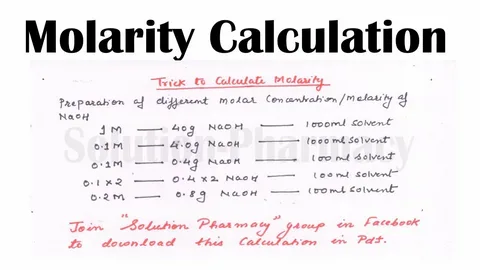
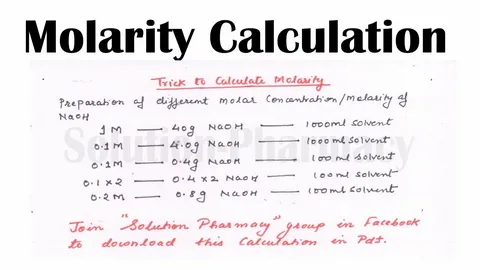
For example, to make a 0.5 M NaCl solution in 500 mL:
- Moles needed: 0.5 mol/L × 0.5 L = 0.25 moles.
- Mass: 0.25 × 58.44 g/mol = 14.61 g.
A calculator handles this in seconds, including unit conversions.
Top Features of the Best Molarity Calculators
The best molarity calculators stand out with intuitive design and advanced features. Based on user reviews and expert recommendations, here are key attributes:
- Ease of Use: Simple interfaces with clear labels. No steep learning curve—ideal for beginners.
- Accuracy and Precision: Built-in error checks and support for decimal places.
- Versatility: Handles molarity, molality, normality, and dilutions. Some integrate with pH or density calculators.
- Educational Value: Explanations, examples, and links to resources.
- Accessibility: Free, web-based, and mobile-friendly. No downloads or sign-ups required.
- Customization: Options for units (e.g., mg to g, mL to L) and temperature adjustments for density.
Popular options include Sigma-Aldrich’s tool for lab professionals, Calculator.net for quick tasks, and Omni Calculator for in-depth analysis. These are praised on forums like Reddit for their reliability.
Step-by-Step Guide to Using a Molarity Calculator
Ready to try it? Follow this guide for effective use:
- Choose a Tool: Start with a reputable one like the Sigma-Aldrich Molarity Calculator.
- Enter Solute Details: Input mass and molar mass. If unsure, use the tool’s database.
- Specify Volume: Enter in liters (convert if needed: 1 L = 1000 mL).
- Calculate: Hit “compute” for instant results. Review for dilutions if preparing from stock.
- Verify: Cross-check with manual math to build confidence.
Pro Tip: For dilutions, use the formula C1V1 = C2V2, where C is concentration and V is volume. Many calculators include this.
Benefits of Using a Molarity Calculator
Why switch from manual calculations? Here are compelling reasons:
- Time-Saving: What takes 10 minutes manually is done in seconds.
- Error Reduction: Eliminates miscalculations, crucial in labs.
- Educational: Reinforces learning with visual aids.
- Accessibility: Available anytime, anywhere.
- Cost-Effective: Free tools mean no expensive software.
In research, this boosts productivity. Students report better grades, while professionals avoid costly mistakes.
Common Mistakes and How to Avoid Them
Even with calculators, errors happen. Watch out for:
- Unit Confusion: Always convert to consistent units (e.g., grams and liters).
- Molar Mass Errors: Double-check periodic table values.
- Volume Oversight: Account for solute volume if significant.
- Temperature Effects: For precise work, consider how temperature affects density.
Use examples: A 1 M sugar solution might differ at room vs. boiling temp. Avoid these by using advanced calculators with adjustments.
Real-World Applications
Molarity calculators aren’t just academic—they’re practical:
- Lab Prep: Pharmacists use them for IV solutions.
- Environmental Science: Measuring pollutant concentrations.
- Cooking: Bakers calculate salt or yeast in recipes.
- Industry: Brewing beer or manufacturing detergents.
Case Study: In a lab, a researcher used a calculator to prepare a 0.1 M buffer, ensuring accurate pH for enzyme studies.
Advanced Tips for Power Users
For experts:
- Integrate with spreadsheets (e.g., Excel formulas).
- Use APIs for custom apps.
- Explore related tools like stoichiometry calculators.
- Consider software like ChemDraw for complex simulations.
Stay updated: Chemistry evolves, so follow sites like ACS for new tools.
Conclusion: Empower Your Chemistry Journey
Molarity is the backbone of solution chemistry, and the best molarity calculator makes it accessible to all. From students to scientists, these tools democratize knowledge, fostering innovation and accuracy. Start exploring today—input your values and watch the magic happen. Remember, chemistry is about discovery, and with the right tools, you’re unstoppable. If you have questions or need recommendations, dive deeper into our resources. Happy calculating!